What is RAG? The Tech Behind Smarter AI Answers
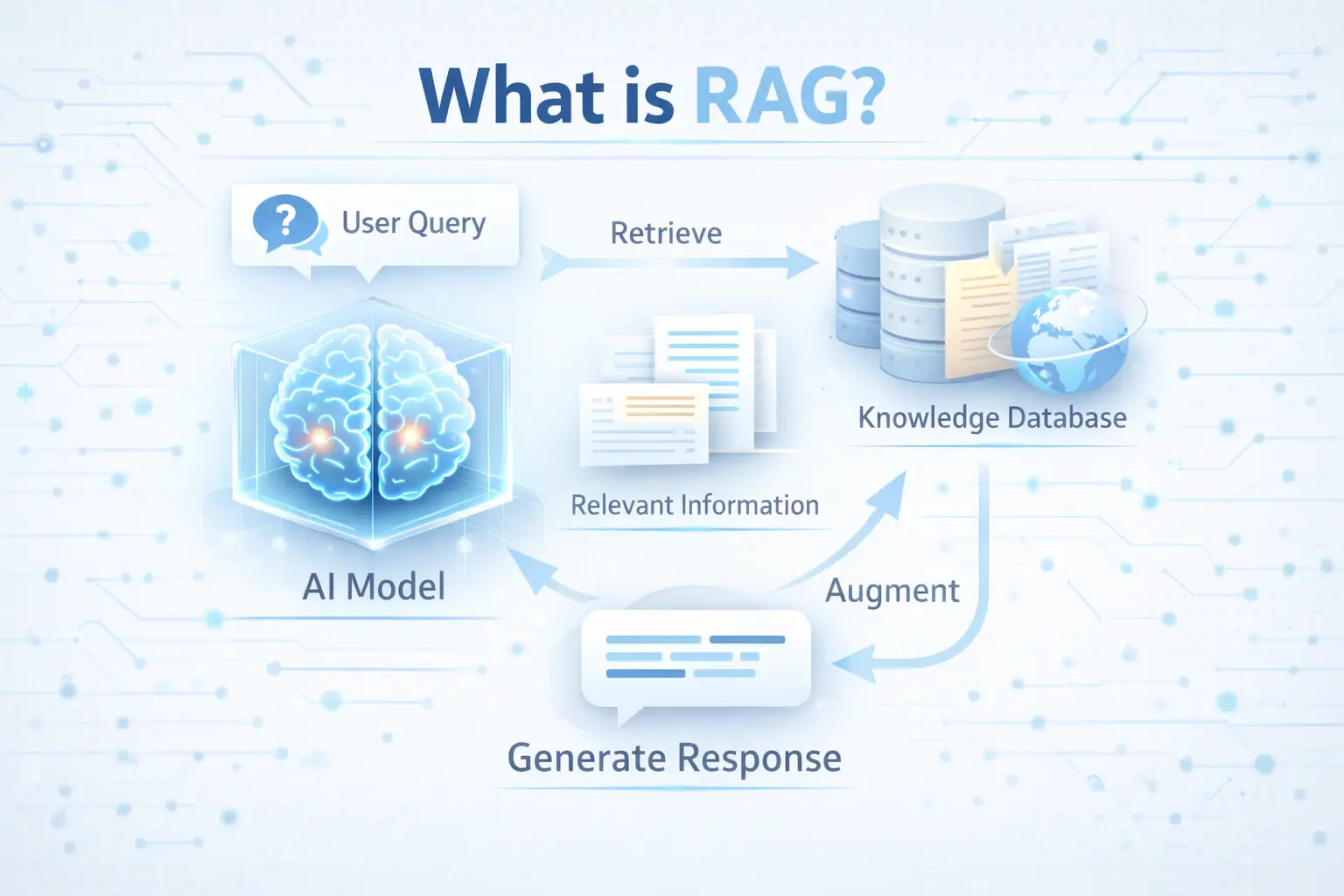
Ever asked ChatGPT something recent, like “Who won ICC Men’s T20 World Cup?” and it confidently gave you the wrong answer? It will start citing the old T20 World Cup league. That’s not a bug. That’s a limitation (it’s a knowledge cutoff). And RAG is exactly how the AI world is fixing it.
So What Is RAG, Exactly?
RAG stands for Retrieval-Augmented Generation.
Big words. Simple idea.
Think of it like this: a regular AI (like the base version of ChatGPT) is like a student who studied really hard for an exam, but only until a certain date. After that? They know nothing new. Ask them about last week’s news and they’ll either guess or make something up (yes, AI does that, it’s called hallucination).
RAG fixes this by giving the AI an “open book” during the exam.
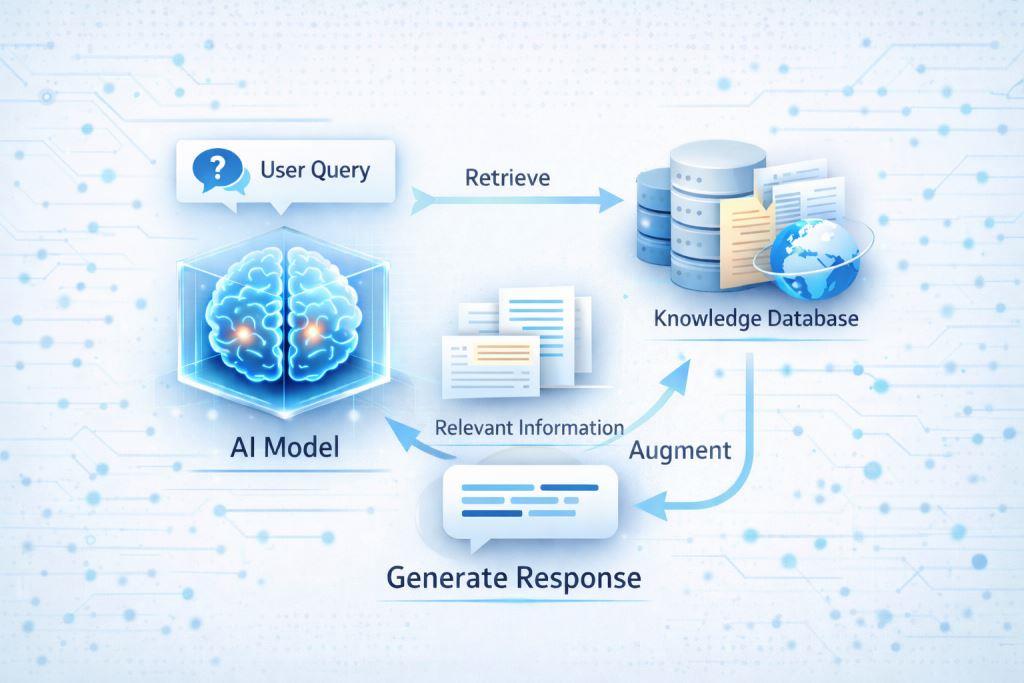
Instead of relying only on what it memorized during training, a RAG-powered AI can:
- Retrieve relevant, up-to-date information from a database or the web
- Read that information in real-time
- Generate a proper answer based on facts
That’s it. Retrieve → Read → Respond. RAG.
Why Does This Matter? (The Problem It Solves)
Regular AI models have a knowledge cutoff. That means they stop learning at some point, maybe 6 months ago, maybe a year ago. Anything after that? They’re flying blind.
This creates two big problems:
- 1. Outdated answers – The AI gives you old information as if it’s current.
- 2. Hallucinations – When the AI doesn’t know something, it sometimes makes stuff up confidently. And that’s genuinely dangerous.
RAG solves both. It gives the AI access to a live or curated knowledge source so it can check facts before answering, instead of just guessing from memory.
How RAG Actually Works (Step by Step)
Let’s break it down like a simple pipeline:
Step 1: You Ask a Question
You type: “What are the latest changes in Google’s search algorithm?”
Step 2: The Retriever Goes Searching
The system doesn’t immediately ask the AI. First, a retriever (a search tool) goes and finds the most relevant documents, articles, or data chunks that match your question. This could be from:
- A private company database
- A website
- A PDF library
- A vector database (more on that in a sec)
Step 3: Relevant Chunks Are Picked
Not the whole document, just the most relevant chunks of text. Think of it like highlighting only the important paragraphs from a 50-page report.
Step 4: The AI Gets Context + Your Question Together
Now the AI receives: your question + the retrieved context together as a combined input.
Step 5: AI Generates the Answer
Using the retrieved information as a reference, the AI writes a proper, fact-based answer. Less guessing. More accuracy.
Simple, right?
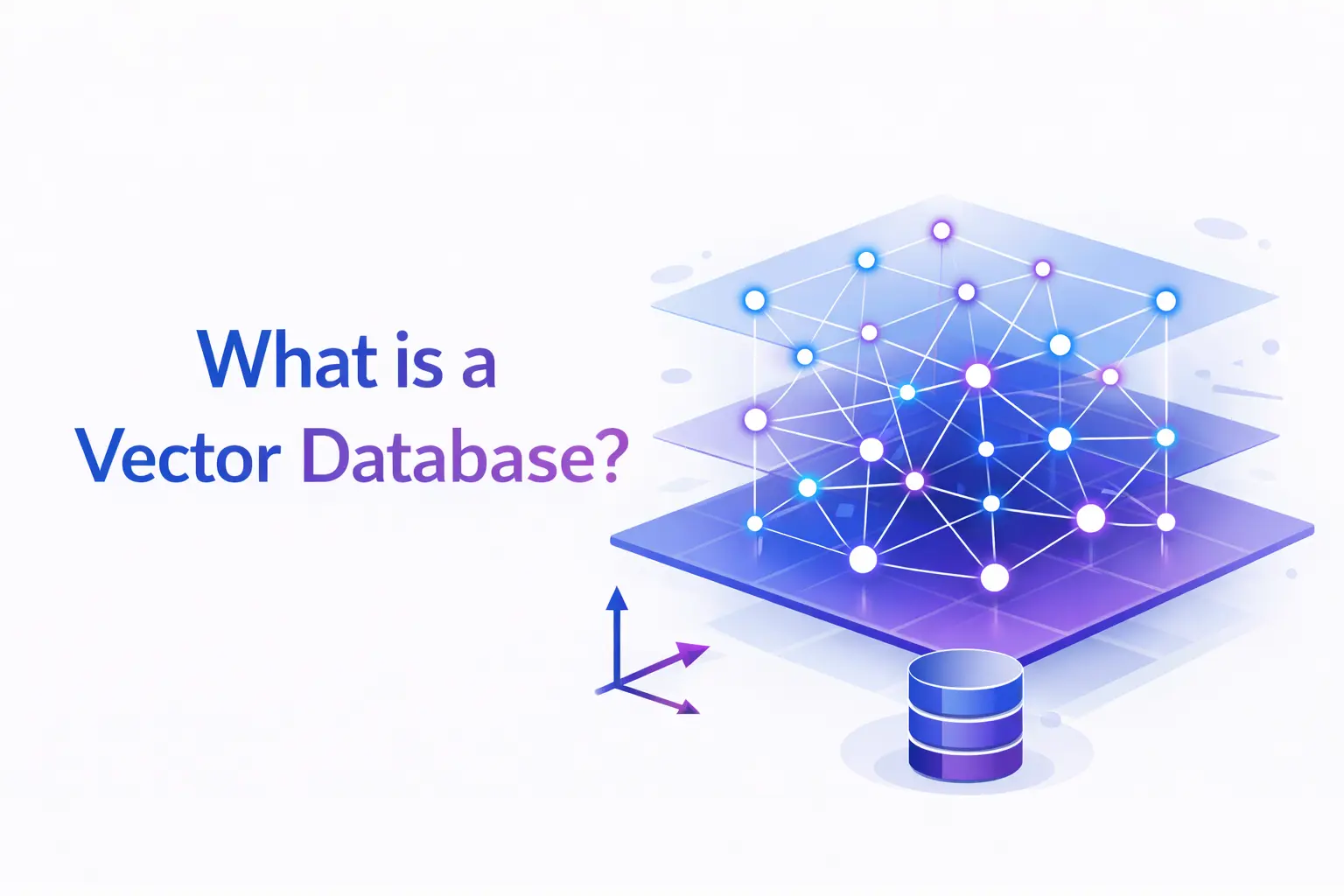
What’s a Vector Database? (The Secret Sauce)
You’ll hear this term a lot around RAG, so let’s keep it simple.
When documents are stored for RAG, they’re converted into something called vectors, basically, numerical representations of meaning. Similar meanings get similar numbers.
So when you ask a question, the system doesn’t search word-by-word. It searches by meaning. That’s why RAG can find relevant info even if you didn’t use the exact right keywords.
Popular vector databases: Pinecone, Weaviate, Chroma, FAISS.
You don’t need to memorize these. Just know: vector database = smart search that understands meaning, not just words.
RAG vs. Fine-Tuning: What’s the Difference?
People often confuse these two. Here’s a quick breakdown:
| RAG | Fine-Tuning | |
|---|---|---|
| What it does | Retrieves live data at query time | Trains the model on new data |
| Cost | Lower | High (needs compute) |
| Updates | Easy, just update your database | Hard — requires retraining |
| Best for | Dynamic, frequently-changing info | Teaching AI a new style or skill |
For most real-world use cases, especially business applications, RAG wins because it’s cheaper, faster to update, and more transparent.
Where Is RAG Being Used Right Now?
RAG isn’t just theory. It’s already powering things you use daily:
- Microsoft Copilot: searches the web and your files before answering
- Google’s AI Overviews: retrieves live search results to generate summaries
- Perplexity AI: built almost entirely on RAG architecture
- ChatGPT with Search: uses retrieval to answer current-event questions
- Customer support chatbots: companies feed their product docs into a RAG system so the bot gives accurate answers
- Legal and medical AI tools: retrieve from specific verified document libraries instead of general training data
Basically, anywhere you need accurate + current + source-grounded answers, RAG is the backbone.
RAG’s Limitations (It’s Not Perfect)
Let’s be honest, RAG isn’t a magic fix. It has some real limitations:
1. Garbage In, Garbage Out – If the database it retrieves from is outdated or inaccurate, the AI’s answers will be too. RAG is only as good as its data source.
2. Retrieval Can Miss the Point – Sometimes, the retriever fetches the wrong chunks. If the wrong context goes in, the wrong answer comes out.
3. Longer Processing Time – Because it has to search before generating, RAG can be slightly slower than a direct AI response.
4. Complexity – Building a good RAG pipeline requires decent engineering; it’s not plug-and-play for everyone.
Still, for most use cases, the benefits far outweigh the limitations.
Should You Care About RAG as a Regular User?
Honestly? Yes, and here’s why.
If you use AI tools for work, research, or content creation, RAG-powered tools will give you more reliable answers than non-RAG ones. Knowing this helps you:
- Choose better AI tools (look for ones that cite sources)
- Understand why some AI answers are better than others
- Build smarter AI-powered products if you’re a developer or entrepreneur
And if you’re building AI into your product or website? RAG is probably the architecture you want, not just a vanilla language model.
Quick Recap (TL;DR)
- RAG = Retrieval-Augmented Generation
- It gives AI access to a knowledge source before generating answers
- Reduces hallucinations and outdated information
- Works in three steps: Retrieve → Read → Respond
- Already powers Perplexity, Copilot, Google AI Overviews, and more
- Cheaper and more flexible than fine-tuning for most use cases
Final Thought
RAG is one of those technologies that sounds complicated but is actually solving a very human problem: nobody wants to talk to someone who confidently makes things up.
AI was doing that a lot. RAG is the course correction.
As AI tools become more embedded in how we search, work, and create, understanding what’s happening under the hood (even at a basic level) makes you a smarter user of these tools.
And now you know.
❓ FAQ: RAG (Retrieval-Augmented Generation)
Q1. What is RAG (Retrieval-Augmented Generation)?
RAG is an AI technique that combines a language model with an external knowledge source. Instead of relying only on training data, the model retrieves relevant information first and then generates a response, making answers more accurate and up-to-date
Q2. How does RAG work?
RAG works in two main steps:
- Retrieve relevant documents from a database or knowledge source
- Generate a response using the retrieved information
This combination improves context and reduces incorrect answers.
Q3. Why is RAG important in AI?
RAG is important because it:
- Reduces hallucinations
- Provides real-time, updated information
- Improves the accuracy of AI responses
It allows AI models to go beyond their training data and use external knowledge sources
Q4. What is the difference between RAG and fine-tuning?
- RAG: Retrieves external data at runtime (dynamic, flexible)
- Fine-tuning: Updates model weights permanently (static, expensive)
RAG is generally preferred for frequently changing data.
Q5. What are the main components of a RAG system?
A typical RAG system includes:
- Retriever (search system/vector database)
- Knowledge base (documents, APIs, etc.)
- Generator (LLM like GPT)
Together, they form a pipeline that retrieves and generates responses.
Q6. What is a vector database in RAG?
A vector database stores embeddings (numerical representations of text) and helps find similar content using semantic search. It is a core part of modern RAG systems.
Q7. Does RAG replace traditional search engines?
No. RAG enhances search by combining it with AI generation. It doesn’t replace search; it makes it smarter and more contextual.
Q8. What are real-world use cases of RAG?
- AI chatbots with company knowledge
- Document search systems
- Customer support automation
- Healthcare and legal assistants
- Enterprise knowledge systems
Q9. Can RAG work without embeddings?
Technically, yes (using keyword search), but modern RAG systems usually combine semantic embeddings + keyword search for better results.
Q10. Does RAG eliminate hallucinations?
No, but it significantly reduces them by grounding responses in real data sources instead of guessing.

I'm a tech guy at heart, always exploring, always learning. From AI and modern tech to hands-on how-to guides, I write about the things I discover so you don't have to figure it out alone.