What Happens Inside ChatGPT When You Ask a Question?

You type something. Hit enter. And within seconds – boom – ChatGPT replies like it totally gets you. But have you ever wondered what’s actually happening behind that screen? Like, what’s going on inside the machine between your question and its answer?
Spoiler: it’s not magic. It’s math. Very clever, very fast math.
Let’s break it down – step by step – in plain English.
First, What Even Is ChatGPT?
Before we get into the process, quick background: ChatGPT is built on something called a ‘large language model’ (LLM) – specifically, OpenAI’s GPT series. It’s a neural network trained on a massive amount of text from the internet, books, code, and more.
It doesn’t “think” the way you do. It doesn’t have feelings or opinions. What it does extremely well is predict what word should come next, based on everything you’ve said and everything it’s learned.
That prediction chain is where the magic happens.
Step 1: Your Words Get Turned Into Numbers (Tokenization)
The moment you hit send, ChatGPT doesn’t read your message as words. It breaks it into tokens, small chunks of text. A token can be a whole word, half a word, or even just a punctuation mark.
For example:
“What is AI?” →
["What", " is", " AI", "?"]– 4 tokens
Why numbers? Because computers don’t understand language. They understand numbers. So every token gets mapped to a number, and your entire message becomes a sequence of numbers that the model can actually process.
This step is called tokenization, and it’s the very first thing that happens.
Step 2: Understanding Context – The Attention Mechanism
Here’s where it gets interesting.
ChatGPT doesn’t just look at one word at a time. It looks at all your words together and figures out how they relate to each other. This is done using something called the Transformer architecture – specifically, a mechanism called “self-attention.”
Think of it like this: if you say, “He picked up the bat and flew away,” is “bat” a sports bat or an animal? A human figures it out using context. ChatGPT does the same thing. It measures how much each word relates to every other word in the sentence.
The word “flew” makes “bat” lean heavily toward “animal.” That’s attention working in real time.
This happens across multiple layers, sometimes 96 layers deep in GPT-5, each one refining the model’s understanding a little more.
Step 3: Your Question Travels Through the Neural Network
Once your message is tokenized and the attention mechanism has mapped the relationships between words, the data travels through the neural network layers.
Each layer is made up of millions (actually, billions) of parameters, numbers that were tuned during training to recognize patterns in language. Think of them like tiny dials, each one adjusted over months of training on enormous datasets.
As your question passes through these layers, the network transforms the raw input into something called a hidden representation – essentially, a deep mathematical understanding of what you’re asking, what tone you’re using, and what kind of answer you probably want.
No layer alone “understands” your question. But together? They figure it out.
Step 4: Generating the Answer – One Token at a Time
The model now starts writing a reply. And here’s the wild part: it doesn’t generate the whole answer at once.
It generates one token at a time.
For every token it produces, it goes back through the entire network, considers everything said so far (your question + its own answer so far), and predicts the most likely next token.
Then the next. Then the next.
This is why ChatGPT’s reply appears to “stream” word by word: it is literally building the answer word by word, running the full model each time.
Step 5: Temperature and Randomness – Why It Doesn’t Always Say the Same Thing
Ask ChatGPT the same question twice. You might get slightly different answers. Why?
There’s a setting called temperature that controls how “creative” or “random” the output is.
- Low temperature (0) = Very predictable, almost robotic answers
- High temperature (1+) = More creative, but can go off-track
ChatGPT usually runs at a moderate temperature enough to sound natural and human, but not so high that it starts making things up wildly. (Though yes, it can still hallucinate more on that below.)
Why Does ChatGPT Sometimes Get Things Wrong? (Hallucination Explained)
Since ChatGPT is always predicting the next most likely word, it can confidently generate text that sounds correct but is factually wrong. This is called hallucination. To understand hallucination better, read a guide on what AI hallucination is.
It’s not lying. It genuinely doesn’t know that it’s wrong. It just followed the pattern, and the pattern led it somewhere false.
This is one of the biggest limitations of LLMs today and why tools like Retrieval-Augmented Generation (RAG) are being added to pull real-time, verified information before answering.
What About Memory? Does ChatGPT Remember You?
Within a single conversation, ChatGPT remembers everything because your entire chat history is fed back into the model as context with every new message.
But by default, once you start a new chat, that context is gone. It starts fresh.
OpenAI has added a Memory feature to ChatGPT Plus that stores certain facts across sessions, but this is added on top of the core model, not part of how the model itself works.
The Whole Process In 10 Seconds
Just to recap the full journey:
- You type a question
- It gets broken into tokens (numbers)
- The attention mechanism maps relationships between words
- It travels through billions of parameters across deep neural network layers
- The model builds a mathematical understanding of your intent
- It generates a reply one token at a time
- Temperature adds a little natural variation
- You read the answer
All of this in under a second. Usually.
Final Thought
ChatGPT isn’t conscious. It doesn’t “think” or “know” anything the way you do. But what it does is genuinely impressive; it turns your words into numbers, finds patterns that span billions of examples, and generates a response so fluent it feels like talking to a person.
The more you understand how it works, the better you can use it and the better you can spot when it’s wrong.
Now that you know what’s happening inside, go ask it something good.
❓ FAQ: What Happens Inside ChatGPT
Q1: Does ChatGPT understand what I’m saying?
Not in the human sense. It processes statistical patterns in language, not true meaning. But its outputs are so refined that it behaves as if it understands.
Q2: Is ChatGPT reading from the internet in real time?
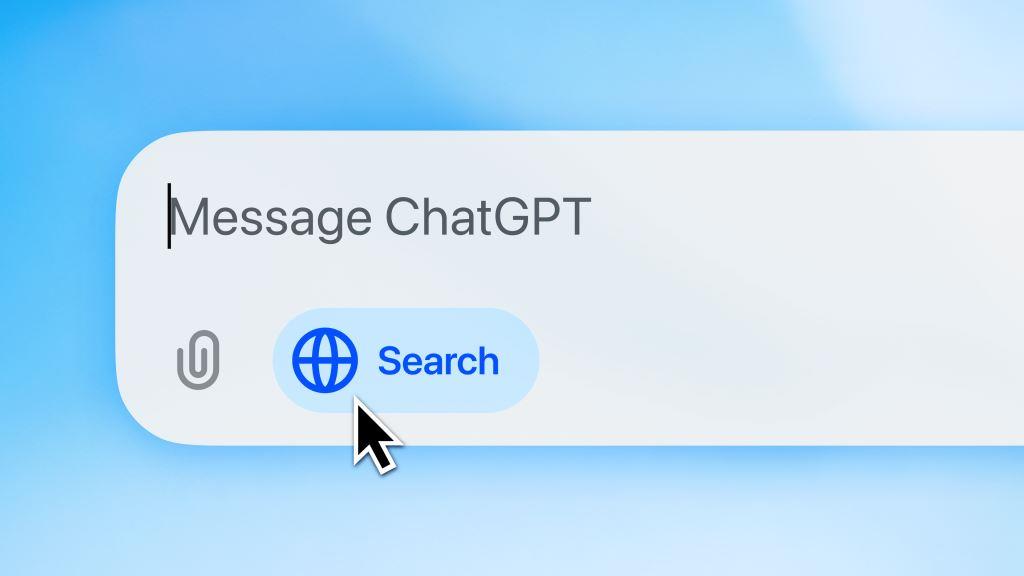
The base model doesn’t browse the internet unless it has tools enabled (like the Bing integration or web browsing plugin in ChatGPT Plus).
Q3: How does ChatGPT know so much?
It was trained on a massive dataset, hundreds of billions of words from books, websites, code repositories, and more, before being fine-tuned for conversation.
Q4: Can ChatGPT learn from our conversations?
Not in real time. It doesn’t update its weights during a chat. Your conversation may be used for future training (depending on your settings), but not immediately.
Q5: What is a token in ChatGPT?
A token is a unit of text, roughly ¾ of a word on average. ChatGPT processes everything as tokens, not raw words.

I'm a tech guy at heart, always exploring, always learning. From AI and modern tech to hands-on how-to guides, I write about the things I discover so you don't have to figure it out alone.