What is AI Hallucination? Why AI Makes Up Facts (Explained Simply)
You ask ChatGPT a question. It gives you a confident, well-written answer. You think – wow, this AI is smart.
Then you Google it. And realize… half of it was completely made up.
That moment of shock? That’s called AI Hallucination, and it happens more often than you’d think.
So, What Exactly is AI Hallucination?
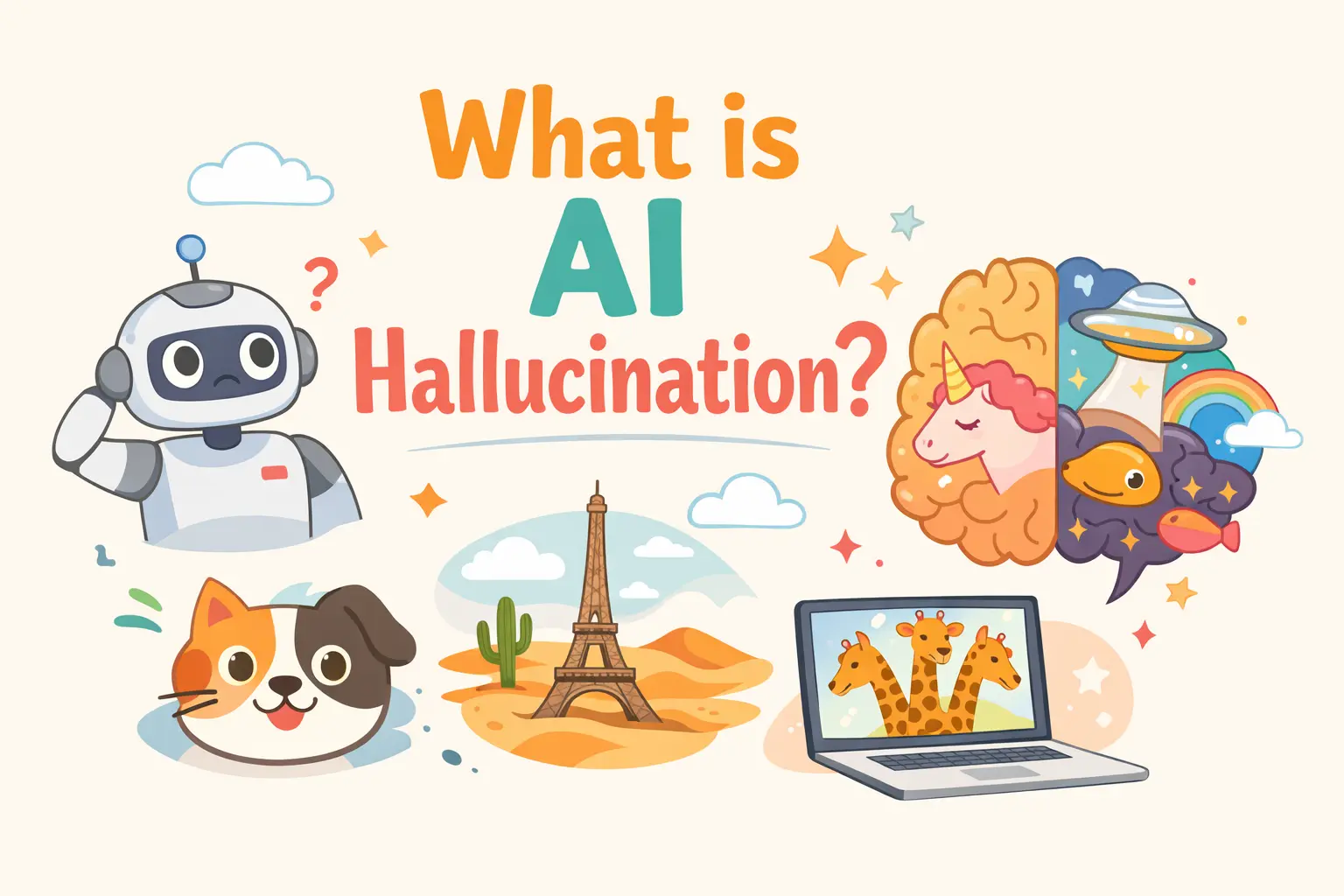
AI hallucination is when an AI model generates information that sounds totally real but is factually wrong, made up, or simply doesn’t exist.
It’s not a bug in the traditional sense. The AI isn’t “broken.” It’s doing exactly what it was built to do: predict the most likely next word, and sometimes that leads it to confidently say completely false things.
Think of it like this:
Imagine a student who didn’t study for an exam. Instead of saying “I don’t know,” they write a very convincing but totally incorrect answer. They sound confident. They use the right words. But the content? Pure fiction.
That’s exactly what AI hallucination looks like.
A Real Example of AI Hallucination that Went to Court
In 2023, a lawyer in the US used ChatGPT to research legal cases for a real lawsuit (Mata v. Avianca). The AI cited multiple court cases to support his argument, complete with case names, dates, judge names, and even excerpts of judicial opinions.
None of those cases existed.
The lawyer submitted them to the court. The judge was not amused. The lawyer faced serious professional consequences.
What made it worse? The more details the lawyer asked for, the more convincingly the AI invented them. The AI didn’t hesitate. It didn’t say “I’m not sure.” It just… made it all up. Confidently.
This case became a landmark moment in AI ethics, a warning that the more you push an AI for specifics on niche topics, the higher the risk it starts fabricating details.
Why Does AI Hallucinate?
Here’s the simple explanation:
AI language models like ChatGPT, Gemini, or Claude are trained on massive amounts of text from the internet, books, and articles. They learn patterns, how words and sentences fit together.
But they don’t actually understand what they’re saying. They’re predicting what text should come next based on those patterns.
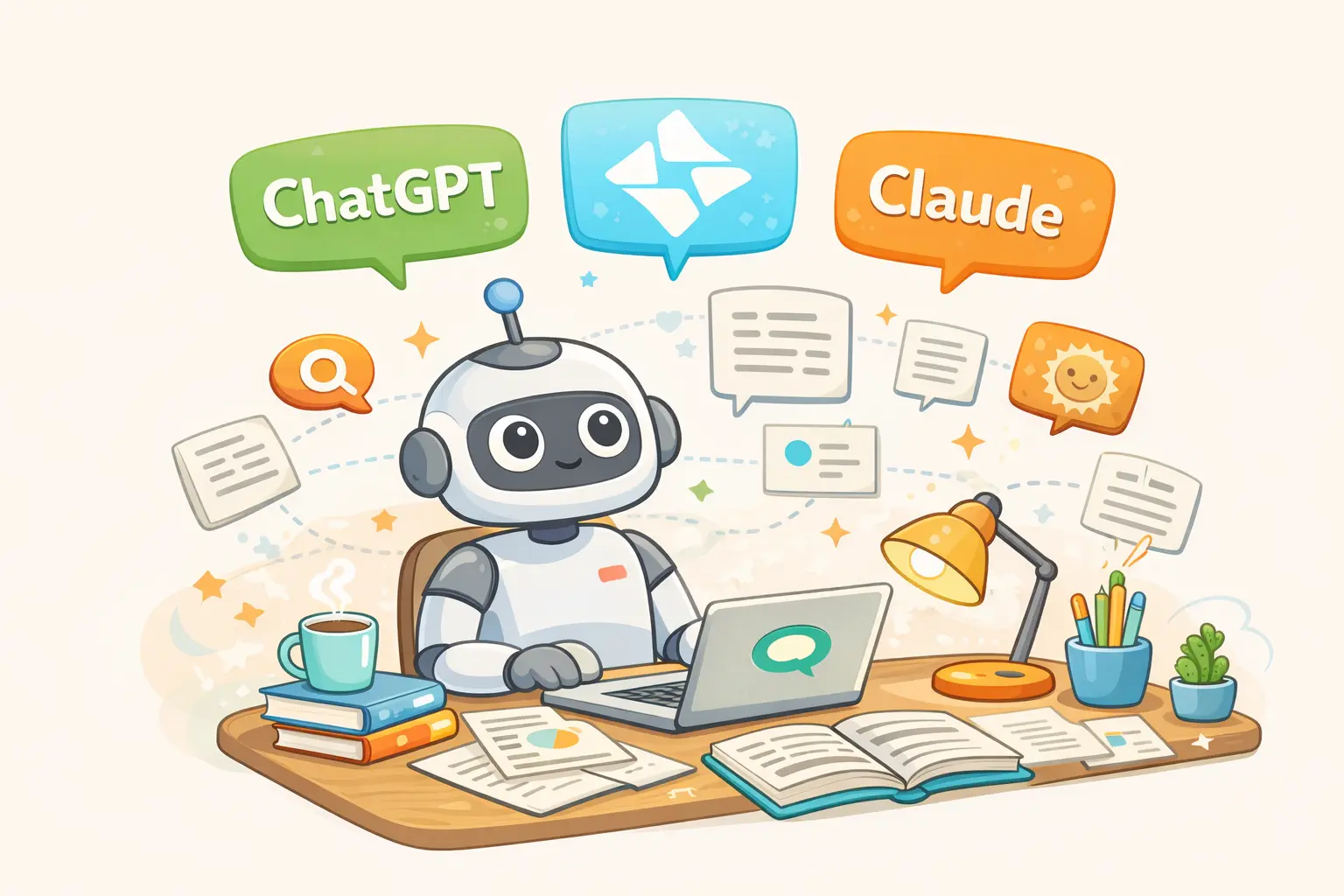
So when you ask something the AI doesn’t know, or when training data was incomplete or outdated, instead of saying “I don’t know,” it fills in the gap with something that sounds right.
The main reasons hallucinations happen:
- 1. Gaps in training data: The AI was never trained on that specific fact, so it guesses.
- 2. Outdated information: AI models have a knowledge cutoff date. Anything after that is a blind spot.
- 3. Overly confident design: Most AI models are designed to always answer, not to say “I’m not sure.”
- 4. Ambiguous questions: Vague questions lead the AI to misinterpret and go in a completely wrong direction.
- 5. Complex or rare topics: The less data available on a topic, the higher the chance of hallucination.
- 6. Temperature settings: This is a technical factor most people don’t know about. AI models have a “temperature” dial that controls how adventurous they are with word choices.
- At low temperature, the AI plays it safe and sticks to the most probable words (fewer hallucinations, less creative).
- At high temperatures, it takes creative risks (more interesting, but a higher chance of making things up). Most consumer AI tools run somewhere in the middle, which means you’re always getting a mix of both.
Types of AI Hallucinations
Not all hallucinations look the same. Here’s what to watch out for:
- Factual Hallucination: The AI states a wrong fact as if it’s true. Example: “The Eiffel Tower was built in 1901.” (It was actually completed in 1889.)
- Source Hallucination: The AI cites a book, research paper, or article that doesn’t exist. Example: Inventing a fake study from “Harvard Medical Journal, 2022.”
- Person Hallucination: The AI makes up quotes or achievements from real people. Example: Attributing a fake quote to Elon Musk.
- Logic Hallucination: The AI’s reasoning sounds correct step-by-step, but the conclusion is wrong.
- Self-Contradiction: The AI says one thing, then says the opposite later in the same response.
How Common is AI Hallucination?
More common than AI companies would like to admit.
Studies have shown that large language models hallucinate on anywhere from 3% to over 27% of responses, depending on the topic. For complex, niche, or recent topics, that number goes even higher.
Even the best AI models today, GPT-5, Gemini, and Claude, all hallucinate. They’ve gotten better, but none have fully solved this problem.
AI vs. Traditional Search: What’s the Difference?
| Feature | Traditional Search (Google) | Generative AI (ChatGPT / Gemini / Claude) |
|---|---|---|
| Primary Goal | Finding existing documents | Creating new text based on patterns |
| Truth Source | The indexed web | Internalized weights and training data |
| When It Fails | Irrelevant or spammy results | Confident, convincing falsehoods |
| Best Used For | Verification, citations, live data | Summarizing, drafting, and brainstorming |
Neither is perfect. Google surfaces misinformation too, especially from SEO-heavy content. But the nature of AI failure is more dangerous because it sounds authoritative even when it’s wrong.
How to Protect Yourself from AI Hallucinations
The good news? You don’t have to stop using AI. You just need to use it smartly.
1. Always verify important facts. Don’t trust AI-generated facts for anything critical. Google them. Check primary sources.
2. Don’t use AI for legal, medical, or financial advice without verification. These are exactly the areas where hallucinations can cause real damage, as the Mata v. Avianca case proved.
3. Ask the AI for sources, then verify them separately. It might still invent sources, but it forces the model to be more deliberate. Always check those sources independently.
4. Use AI tools with web search enabled. Tools like Perplexity AI or ChatGPT with Browse mode can pull live data, which reduces (but does not eliminate) hallucinations.
5. Watch for red flags. Very specific names, dates, statistics, or quotes, those are the moments to be most skeptical.
6. Ask follow-up questions. “Are you sure about this?” sometimes causes the AI to correct itself or admit uncertainty.
7. Give the AI explicit permission to say “I don’t know.” By default, AI models are designed to be helpful, which means they’ll fill in gaps rather than leave them. Simply adding this to your prompt often helps:
“If you are unsure or don’t have reliable data on this, please say so directly instead of guessing.”
This one instruction can meaningfully improve accuracy on niche or specific queries.
8. Try a “slow down” prompt for high-stakes questions. For important research, try prompting the AI like this:
“First, list the key facts you plan to use. Then write your response using only those facts.”
This forces the model to be more deliberate. Note: it’s not foolproof, AI can still confidently “verify” its own wrong facts, but it’s a useful habit that reduces casual hallucination.
Are AI Companies Fixing This?
Yes and no.
This is one of the hardest problems in AI research right now. Companies like OpenAI, Google, and Anthropic are actively working on reducing hallucinations through:
- Better training data – More accurate, curated sources
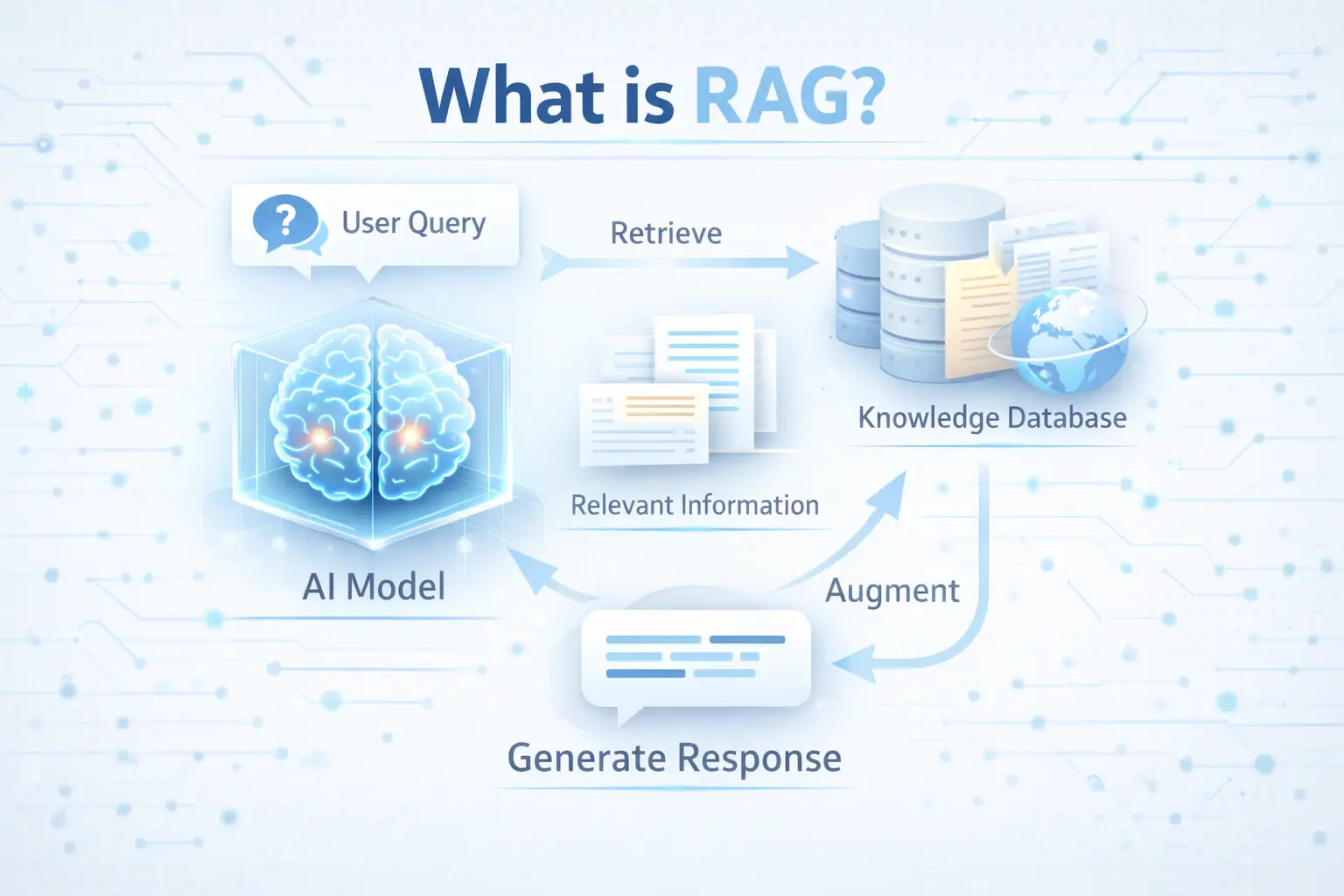
- Retrieval-Augmented Generation (RAG) – Making AI pull from verified databases before answering. You can understand better through the “what is RAG in AI/LLMs“ guide, how it works, and reduces hallucination.
- Reinforcement Learning from Human Feedback (RLHF) – Training the AI to say “I don’t know” when appropriate
- Fact-checking layers – Adding verification steps before generating output
Progress is real. But as of today, hallucinations are still a very present part of using AI tools.
The Bigger Picture
AI hallucination isn’t just a technical quirk; it’s a reminder that AI is a tool, not an oracle.
It can write, summarize, explain, and brainstorm better than almost anything we’ve ever built. But it doesn’t know things the way humans do. It doesn’t fact-check itself. It doesn’t feel embarrassed when it’s wrong.
The responsibility of verification still sits with you.
The golden rule: Use AI for synthesis, summarizing, formatting, and brainstorming. Use search for verification dates, names, citations, and sources.
Use AI to work faster. Use it to think better. But never stop thinking for yourself.
Quick Recap: What is AI Hallucination?
- AI hallucination = when AI generates false information that sounds completely convincing
- It happens because AI predicts words; it doesn’t truly “understand” facts
- It can include fake sources, wrong facts, made-up quotes, or flawed logic
- Temperature settings, training gaps, and vague prompts all make it worse
- Even the best AI models hallucinate – GPT-5, Gemini, Claude, all of them
- The fix: always verify critical information from reliable sources, and give AI explicit permission to say “I don’t know.”
Have you ever been fooled by an AI hallucination? Drop your experience in the comments; you’re probably not alone.
FAQ: AI Hallucination
Q: What is AI hallucination?
AI hallucination is when an AI model generates information that sounds real and confident but is factually wrong, made up, or doesn’t exist. It happens because AI predicts words based on patterns, not because it truly understands facts.
Q: Why does AI hallucinate?
AI hallucinates due to gaps in training data, outdated information, overly confident design, ambiguous questions, complex or rare topics, and high temperature settings that make the model take more creative risks with word choices.
Q: How common is AI hallucination?
Studies show large language models hallucinate on 3% to over 27% of responses, depending on the topic. For complex, niche, or recent topics, the rate is even higher. Even top models like GPT-4, Gemini, and Claude all hallucinate.
Q: How can I protect myself from AI hallucinations?
Always verify important facts independently, avoid relying on AI for legal, medical, or financial advice without verification, ask for sources and check them separately, use AI tools with web search enabled, and explicitly tell the AI to say “I don’t know” if it’s unsure.
Q: What is a real example of AI hallucination?
In the 2023 Mata v. Avianca case, a lawyer used ChatGPT to research legal cases. The AI cited multiple court cases with detailed names, dates, and judicial opinions, none of which existed. The lawyer submitted them to the court and faced serious professional consequences.

I'm a tech guy at heart, always exploring, always learning. From AI and modern tech to hands-on how-to guides, I write about the things I discover so you don't have to figure it out alone.