India Orders GitHub to Remove Jack Dorsey’s Bitchat Repositories Over Security Concerns
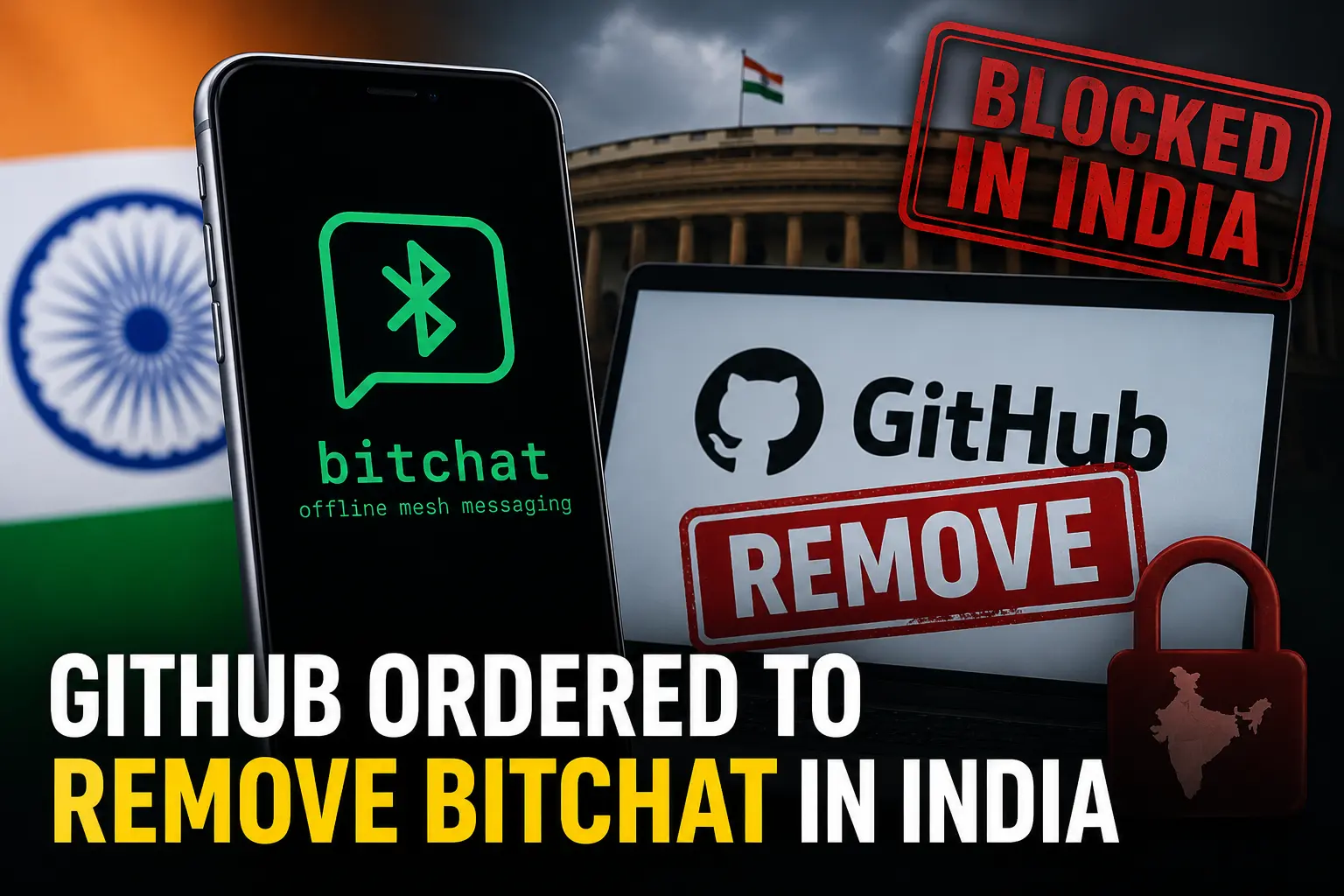
India has ordered GitHub to remove repositories for Bitchat, the decentralized messaging app created by Twitter (now X) co-founder Jack Dorsey, saying the software could be used to bypass lawful surveillance and aid criminal or anti-national activities.
The takedown request was issued by the Indian Cyber Crime Coordination Centre (I4C) under the Ministry of Home Affairs. According to the notice shared publicly by Dorsey, GitHub was instructed to disable access to three Bitchat repositories within three hours of receiving the order.
Why India Is Targeting Bitchat
Unlike WhatsApp, Signal, or Telegram, Bitchat doesn’t rely on the internet.
The app uses Bluetooth Low Energy (BLE) mesh networking, allowing nearby smartphones to relay encrypted messages from one device to another without Wi-Fi, mobile data, SIM cards, phone numbers, or central servers.
Indian authorities argue that this architecture makes lawful interception and digital investigations significantly more difficult. The notice claims the technology could be misused during internet shutdowns, riots, terrorism, organized crime, or other situations where authorities need to monitor communications.
Government Cites National Security Risks
In its notice, I4C said Bitchat enables anonymous communication without user registration or centralized logging, making it harder for law enforcement agencies to trace conversations or identify participants.
Officials also argued that decentralized Bluetooth mesh networks could allow users to continue communicating even when internet services are suspended, creating what the government described as a “substantial risk of misuse” by terrorists, cybercriminals, organized crime groups, and anti-national elements.
Jack Dorsey Pushes Back
Dorsey responded by posting the government notice on X, writing:
“The government of India does not like technologies like Bitchat and wants it taken down.”
the government of india does not like technologies like bitchat and wants it taken down pic.twitter.com/gjzMg1NGCi
— jack (@jack) July 24, 2026
His post quickly sparked debate among developers, cybersecurity researchers, and digital rights advocates over whether governments should be able to restrict open-source software based on how it might be used.
Digital Rights Groups Question the Move
The takedown order has already drawn criticism from privacy advocates.
Organizations including the Internet Freedom Foundation (IFF) argue that removing open-source code from GitHub does little to stop software that has already been downloaded or forked elsewhere. They also questioned whether India’s legal provisions allow authorities to remove an entire software project because of its potential misuse rather than specific illegal content.
What Happens Next?
At the time of writing, GitHub has not publicly commented on the order.
Even if the repositories are removed, the move may have only limited practical impact. Since Bitchat is open source, copies of its code may continue to exist on other repositories or on developers’ local machines. Existing installations of the app would also continue to function because the software communicates directly between nearby devices instead of relying on GitHub or cloud servers.
Why This Matters
The dispute goes beyond a single messaging app.
As privacy-focused, decentralized communication tools become more common, governments around the world are facing a difficult question: How do you regulate software that has no central server, no user database, and no company controlling every message?
India’s action against Bitchat is likely to become another closely watched example in the ongoing global debate over national security, encryption, open-source software, and digital privacy.

TS Desk is an editorial identity representing the content team at TechSpyglass.com. It focuses on publishing clear, practical articles about technology, gadgets, and global tech news, helping readers stay informed without unnecessary complexity. The content is carefully researched and written to make modern tech topics easy to understand for everyday users, covering everything from digital tools and online trends to the latest updates in the tech world